
The cost of scattered knowledge
Most company knowledge is spread across documents, chat threads, onboarding notes, policy pages, and people who remember how things work. Employees lose time because they have to search, ask around, or interrupt someone who already knows.
An internal agent gives that knowledge a single place to live. The goal is not to replace judgment. The goal is to make the first correct answer easier to find.
What belongs in the agent
Good agent knowledge is operational. It includes policies, process steps, approval rules, support playbooks, product details, common exceptions, and the language the company actually uses with customers.
The agent should also know when to stop. Some issues need a manager, legal review, or a human decision. Clear escalation rules are part of the knowledge base, not an afterthought.
How updates become answers
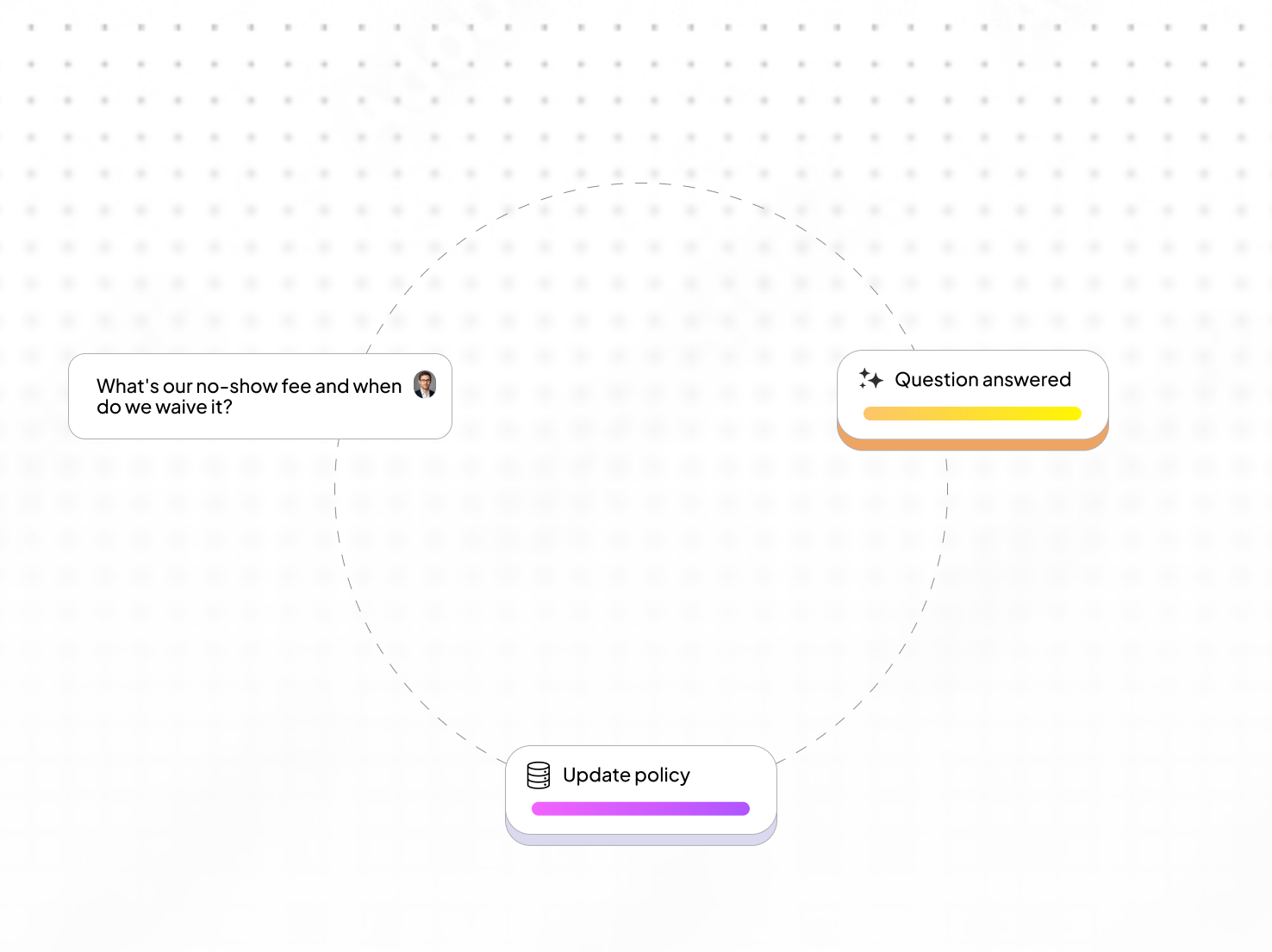
The useful test is simple: when a policy changes, can the next employee question reflect that change? If updates require a chain of manual announcements, people will keep relying on outdated memory.
A maintained company agent turns edits into answers. New rules, corrected language, and improved examples become available through the same interface employees already use to ask questions.